Move with everyday courtesy
Tokyo runs on small, shared habits that make a crowded city feel calm. Nobody expects a visitor to know them all, and honest mistakes are usually met with patience. Knowing the common ones simply removes a layer of worry, leaving more attention for the streets themselves.
Platforms and carriages are quiet places
Platforms are marked with lines showing where the doors will open, and people queue along them. When the train arrives, passengers step off first and the queue boards after. Inside, conversation is kept low, phones are switched to silent and calls are generally avoided until you are back on the platform.
In crowded carriages, a backpack worn on the front or placed on the overhead rack takes up less space. Priority seats near the doors are best left free when others might need them. Eating on ordinary commuter trains is usually avoided, although long-distance trains are a different matter and meals on board are normal there.
Pavements, crossings and escalators
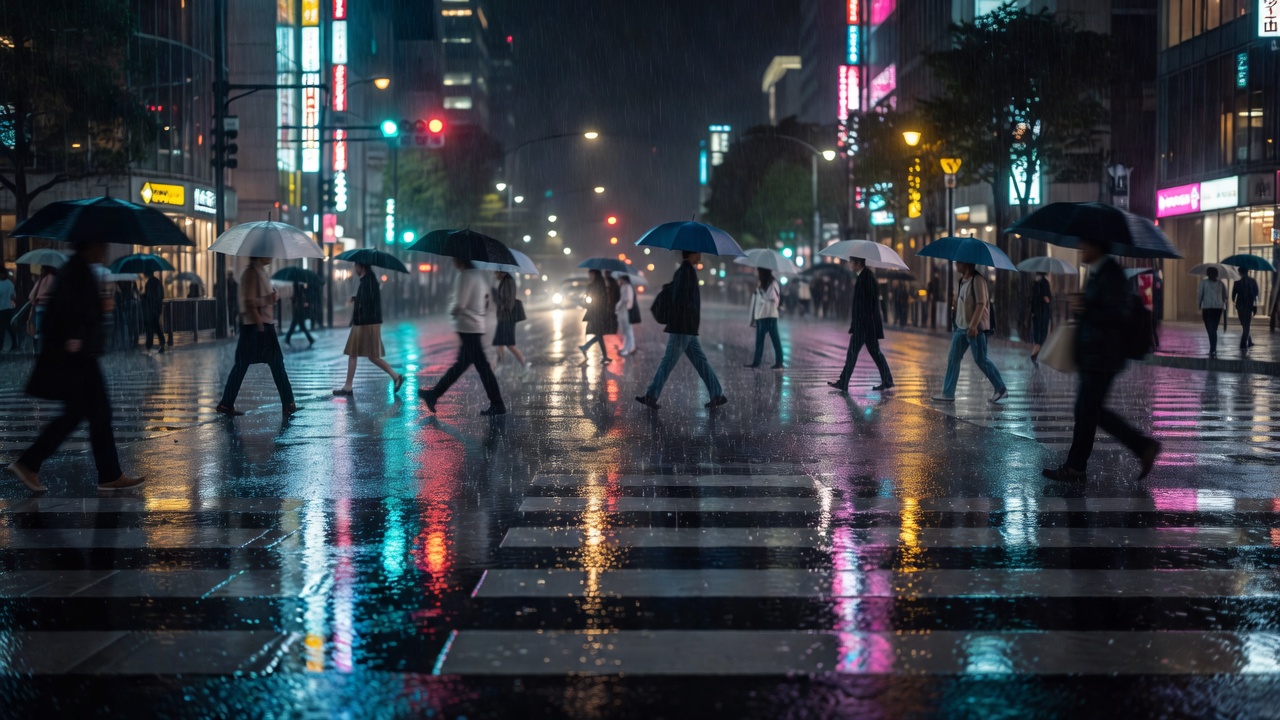
People wait for the green signal at crossings, even when the road is empty, and it is easy to follow their lead. When you need to check a map, step to the side rather than stopping in the flow of foot traffic.
On escalators in Tokyo, people commonly stand on the left and leave the right side clear, although many stations now ask everyone to stand still on both sides. Watch the signs and the people around you. Eating while walking is generally not done; the usual habit is to finish food close to where you bought it. Many parts of the city restrict smoking on the street to designated areas, so look for marked spots.
When unsure, pause and watch for a moment. The street usually shows you what to do.
Rubbish travels with you
Public bins are scarce on Tokyo streets, which surprises many visitors given how clean the city is. The answer is simple: people carry their rubbish until they reach a bin, often back at home or their accommodation. A small folding bag in your day pack solves the problem. Where bins do exist, they are usually separated by type, such as bottles, cans and burnable waste, so take a second to read the labels.
Shrines, temples and quiet grounds
Shinto shrines are usually marked by a torii gate; Buddhist temples often have incense burners and larger halls. At both, quiet voices and attention to signs about photography are appreciated. Taking part in rituals is optional, and simply observing respectfully is perfectly fine. Many visitors choose to use the purification basin at a shrine entrance, which generally works like this:
- Take the ladle in your right hand, fill it and rinse your left hand.
- Switch hands and rinse your right hand.
- Pour a little water into your cupped left hand and use it to rinse your mouth, never touching the ladle to your lips.
- Tilt the ladle upright so the remaining water runs down the handle, then return it.
At the table and at the till
Tipping is not part of everyday custom, and leaving extra money can cause confusion. Many counters have a small tray for placing cash or cards. Cards are widely accepted in larger shops, but small eateries and older businesses may take cash only. Some restaurants use a ticket machine at the entrance: you choose and pay there, then hand the ticket to the staff. Where there is a raised floor, a step at the entrance or a row of slippers, shoes come off.
A few words that carry a long way
- Sumimasen
- Excuse me, sorry, or thank you for the trouble. Useful for getting attention or squeezing past.
- Arigatou gozaimasu
- Thank you, in a polite form suitable for almost any situation.
- Onegaishimasu
- Please, when asking for something or pointing to an item.
- Daijoubu desu
- It's fine, or I'm all right. Handy for politely declining an offer.
Before heading out each day, a short checklist helps: a small rubbish bag, some cash, a topped-up transit card, a phone set to silent and a small hand towel, as many public toilets have no paper towels.